Wednesday, December 14, 2016

What to take away

From this experience of posting I would like to highlight a couple things.

Be yourself and understand others


Don't chase a standard other than your own

Always start a company with a story

Every great business starts with an interesting personality not a er statement

Think for yourself logically even when its inconvenient some times

Do your research

Ask questions why things are as they are

Don't take something at the word as fact

Find your own authenticity

Do things for yourself and be honest what you want

Now I'm off to the kitchen for three weeks slinging doubles, happy holidays and on a last note please look up 

Sean Brock


Really interesting guy and is doing great stuff in the south


You might as well write for yourself

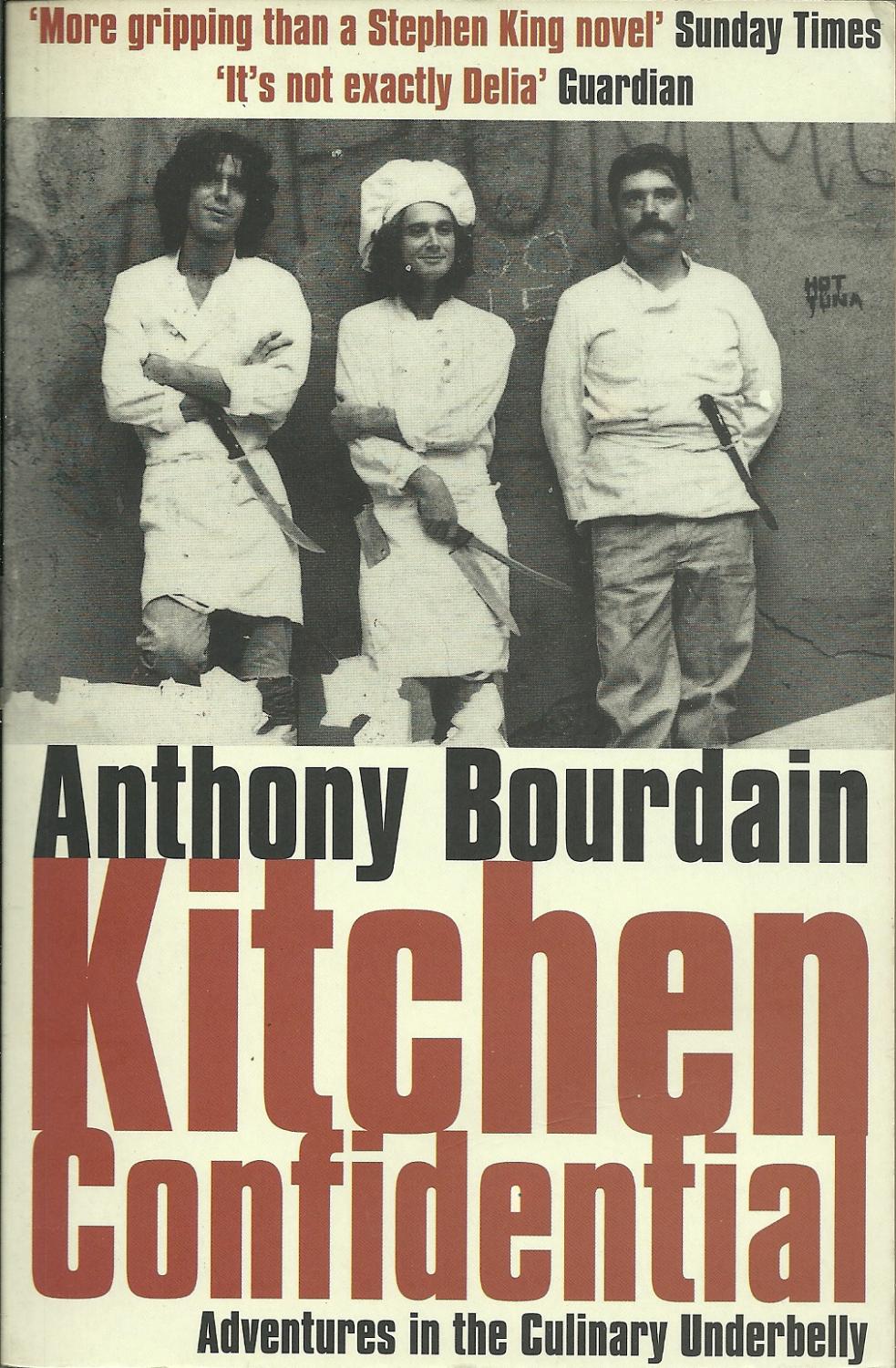
Now days you can't really not know who Anthony Bourdain is from his TV shows to his opinions on other chef's.  I don't agree with everything he has done in his career and from his novel Kitchen Confidential which a lot of us in the culinary world first came to know him echoes the same.  What I respect about the man is that he told you things how it is in the kitchen for a large number of restaurants.  Though the landscape is changing and some of the stardom like effects on the culinary profession are welcomed others are not.  I hate the food network with a passion just like Anthony because it just doesn't feel authentic.  The best tasting food doesn't always look great and this is extremely true in the world of sweets.  I think that's the reason why I like his show parts unknown because he gets to do what every person with a passion for food and travel dream of.  A window into a world of conversations that most of us will either never have the guts or time/ funds.


I live in Montana and anyone can tell you here that there is a variety of personalities in this state.  However, Anthony as he came found people that I would without a doubt call genuine.  The kind of people that do their own thing, don't try to push it on others, and give it to you like it is.  The heart of this state which is do as you please and respect your neighbors rights just as you would hope them to do for you.

In the end I think it all comes down to why he wrote his first book.  He didn't write it to get famous and he sure didn't think a lot of people would be interested in it other then a couple cooks that could relate.  What I'm trying to get at is that he wrote the book for himself and the reason parts unknown is also so successful is for the same reason.  Yes it may be a little selfish and yes self centered but can you really not say the same for anyone else taking a vacation?  The key to being successful is that you have to take something you love to do and find a way to make it profitable Anthony Bourdain has done exactly that made people thank him for it.  So if your going to do anything at least
                                                                                                      be honest with yourself.

Dr. Caroline Graham Austin Ted Talk

So first I would like to start this off with a discussion by Dr. Caroline Graham Austin my professor and the reason I started these posts.

I find her discussion extremely relevant not only because yes we all throughout life struggle with identity and the pursue of living authentically.  But for me it translates to a lot of young adults that go to college or not.  If they do, how to pay, and even as the saying goes (give it the college try) deciding its not for them.  For me this is important because I honestly went to college first just so I could be a ski bum and get some sort of education.  Both my folk's went to college and it made sense to do it because unfortunate now days a Bachelors degree is the equivalent of a GED in the past.  I feel a lot of people think that they are getting a real experience and don't get me wrong teachers like Caroline Graham Austin try their very best.  Succeeding at giving you tools and thought processes  that you will carry throughout your professional career.


 But like how she talked about people watching survival shows just because you show up to class and memorize a few things for a test doesn't mean you've necessarily authentically learned how to apply anything.  I feel that was the point of this these posts.


For me learning in the kitchen just clicks for me it was also the first place that I started defining people by their work habits and its also the place where I go all out.  I like the pressure of getting stuck in the weeds behind the line and having to do things perfectly to catch up.  It also combines most of the things i like about school, history, science, and learning something new every day.  Having an open mind to tasks of the present.  When it comes down to it authentic is always going to fall on you and you alone to define it.

Foi Gras is the Black pearls of perception

I want to talk about a farm just outside of  Pallares, Spain. specifically the farmer

EDUARDO SOUSA


Foie gras is a luxury food product made of the liver of a duck or goose that has been specially fattened. By French law, foie gras is defined as the liver of a duck or goose fattened by force-feeding corn with a feeding tube, a process also known as gavage. Ducks are force-fed twice a day for 12.5 days and geese three times a day for around 17 days. Ducks are typically slaughtered at 100 days and geese at 112 days.

Now I understand a lot of people are against Foi Gras because almost all of it is made by force feeding.  This process I will not lie it is not a pretty process which is used by almost everyone, everyone but Eduardo Sousa.


A little history on the process of Foi Gras, as you read earlier by french definition it has to be force fed to meet the requirements.  However, if you do some digging back in time Egypt was the birthplace and actually it was invented by the Jews.  The original harvesting was done in the fall because naturally as the temperature decreases the goose fatten up for the weather, choosing to eat ravenously.  No joke here is a link to one source http://www.artisanfarmers.org/historyoffoiegras.html 


The story goes that the Pharaoh caught wind of the product and threatened the Jews to come up with a way to have it all year round.  So out of fear they created the process of gavage.  France eventually adopted it and continues to do the process. So in fact France definition by history is actually wrong!


The international gastronomic community has praised the peerless quality of the foie gras Sousa & Labourdette in 2006 during the SIAL, International Agro-alimentary Paris’ fair, winning the prestigious Coup de Cœur award. Which let me tell you France was pissed, the best being something that they by their standard shouldn't be good.  They spent a good chunk of time trying to discredit Sousa until eventually giving up.  I know I'm not going to change the mind of Peta and vegetarians about this mans family going back to the right way of doing foie gras.  But I would like for people to not take for granted the ability to question why something is the norm.  Black pearls used to have no market back in the day till we associated them with other luxury gems now they are worth a lot just because we created an anchor point on the price.


The fickel wording in todays food

In recent year there has been a boom in the use of the word sustainable in the food industry.  The facts themselves however, can be quite the opposite even if the company is supposedly holding the highest standards.  Which is a problem especially in the fishing industry where in the past 50 years we have had more trouble getting it to the plate with so much demand depleting our chances at sustainability.
This is Dan Barber 
You might know him from Times magazine in 2009 as one of the 100 worlds most influential people.  He also was appointed by President Barack Obama to serve on the President’s Council on Physical Fitness, Sports and Nutrition.  What I know him for and other in the culinary world is his restaurant Blue Hill and Blue Hill at Stone Barns.  What he is know for is his knowledge and application of farm to table.  If you watched Chef"s Table specifically the first season episode two its all about him.  Why I am talking about him today though is about his Ted Talk in 2009 about sustainable fishing the episode titled How I fell in Love with a fish but first a few facts on over-fishing:


Now these numbers have slightly shifted since 2009 in his episode but the fact remains that this is a catastrophic problem not only in the kitchen but in the ability for us to eat in the future.  So whats being done?  Well people started fish farming and in a lot of ways it has gotten a bad rap due to the fact it pollutes close to shore and the ration feed to produce is usually pretty bad.  In some cases its as he states in the video a 15 to 1 ration on tuna (really bad).  For reference cattle is 6 to 1 and that's still not great.  Maybe the worst part though is how a farm prides itself on a low ratio in the episode a 2 to 1 (great).  Until you realize that a sustainable protein (chicken) makes up 30 percent of the food and logically how is that in any way the term sustainable?

Not to ruin his talk or for that matter butcher it I will end on this train of thought.  The world isn't going to be saved by the owners of big business or Monsanto.  It's going to be done by biologists and farmers that through trial and error mimicking nature that will.  A large part of educating the public is going to rest on the shoulders of men like Dan Barber in restaurants.  Cooks have long known that fresh wild fish tastes the best we also have been keeping it to ourselves when we get fish and when not to order it on the menu specific days of the week.  In the end like Dan says it all has to do with relationship.


What Supplement Companies Will Not Tell You About Real Food


This is something I have wanted to get off my chest since taking classes in heath and nutrition.  Supplements like a protein shake, pre-workout, and post-workout all are not better for you then REAL FOOD.  I can't help but go back to the idea in the seventies that in the future all food would be in pill form.  The idea never made sense to me but for a lot of people I feel that supplements capitalize on that concept.


Alan Thrall's Supplement Stack video below is a sad truth to the manipulation of the health industry for profit.  Don't get me wrong there is a benefit to use supplements but that benefit is ease of use and time saved.  Most people don't even fit into the category of needing supplement.


Don't even get me started on the Airborn Immune Support Supplements there has been shown no significant evidence tying vitamin C to immune Support.  It was created by Victoria Knight-McDowell, a former school teacher from Carmel, California. She began brewing herbal and vitamin cocktails in the early 1990s and selling them in tablet form to local drug stores. Do I really need to explain my skepticism?

In March 4, 2008 -- If you bought Airborne, the popular herbal and vitamin formula originally touted as a cold preventive, you're due for a refund.

The makers of Airborne have agreed to refund money to consumers as part of a $23.3 million settlement of a class-action lawsuit for false advertising. It does not admit wrongdoing or illegal conduct.

Products included are the Airborne Effervescent Health Formula, Airborne On-the-Go, Airborne Power Pixies, Airborne Nighttime, Airborne Jr., Airborne Gummi, and Airborne Seasonal (formerly sold as Airborne Seasonal Relief). http://www.webmd.com/cold-and-flu/news/20080304/cold-remedy-airborne-settles-lawsuit#1

I think this still stems from for some reason people think the FDA has control over supplements, well truth is they tried.  Unfortunately supplement companies made an ad campaign I kid you not with Mel Gibson


If you want to learn more about how it all works John Oliver's show Last Week Tonight on Dr. Oz and Nutritional Supplements explain it well.


Tuesday, December 13, 2016

What People Crave and Why

In the article "The Extraordinary Science of Addictive Junk Food" the focal point is on the consumption and triggers of eating junk food (how we crave and eat more of it).  The fast food industry also has made it into a science tipping in their favor which has resulted in the declining heath of america. Stated in the article:

The figures were staggering. More than half of American adults were now considered overweight, with nearly one-quarter of the adult population — 40 million people — clinically defined as obese. Among children, the rates had more than doubled since 1980, and the number of kids considered obese had shot past 12 million. (This was still only 1999; the nation’s obesity rates would climb much higher.) Food manufacturers were now being blamed for the problem from all sides — academia, the Centers for Disease Control and Prevention, the American Heart Association and the American Cancer Society. The secretary of agriculture, over whom the industry had long held sway, had recently called obesity a “national epidemic.”

Sugar companies, fast food and junk food have followed in the same footsteps as cigarettes.  Blame lack of exercise, personal choice, and other factor so we can't have any concrete evidence to point the finger.  At an elementary school a "healthy carton of chocolate milk" actually has the amount of sugar in a 250 ml serving of one per cent partly skimmed chocolate milk totals 26.26 grams, according to Health Canada’s Canadian Nutrient File. For comparison purposes, a 355 ml can of Coke has 39 grams of sugar.


This even pours (pun intended) into the fitness industry as seen above with Gatorade having more sugar then can be possibly justified in a sports drink.  Other then to promote the continued consumption through craving.  In the show Adam Ruins Everything a short clip to the right shows that there is no significant need for everyone to drink the 8 glasses of water a day.  Most of the companies that push this are sports drink companies so you buy more.


I can't say the restaurant bushiness is any better 
Anthony Bourdain in an interview with Oprah Winfrey states that on average including bread and butter as an appetizer your gonna be consuming one or two sticks of butter.  The points he states in this clip are the same reasons we do this in our kitchen. We want the food to taste good so you come back for more. 


So at this stage you must be asking so whats my point?  The point is that unfortunately the individual is to blame.  You can't just believe things that are said at the end of the day, think logically.   All the things talked about make sense when broke down, you have only yourself to act in your best interest.

Why restaurants no longer compare to each other in the bigger better bolder sense


Back in the day restaurants would and still are to this day very cut throat.  It's a business that has one of the highest failure rates and lowest margin for error.  This is due to the incredible number of variables that can change at little to no warning.  It also like any entrepreneurial venture involves long hours and little to no vacation, even in the established stages of the business.


In the old days a restaurant would never think of promoting other establishments unless far away.  This was due to the idea that why would I tell someone to eat at anywhere but mine.  This ideology lead to the concept of being the best and (disclaimer I am not trying to knock it) the rise of reservations only specifically in the high end dining.  Creating an atmosphere of exclusivity and luxury the er's of describing.


This type of thinking was used originally in marketing specifically in advertising back in the day.  If you notice now on current commercials you hardly hear advertisements claiming to being whiter, brighter, better, and cleaner.  This is due to the fact that is been proven to no longer work sufficiently on consumers (we bludgeoned the hell out of the concept).  During the days before the internet and the overall globalization of the world, people picked big name brands as they were a staple of reputability ( basically you get what you pay for).  Now days pretty much anything you buy gets the job done within reasonable satisfaction.  Which is why I now find it funny that the process has come full circle coming back the the identity of the company (brand image).


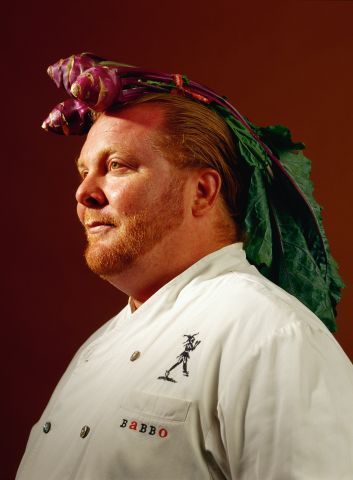
Mario Batali
As seen in the picture above has always made and continues to be an example of someone who represents himself through his knowledge of cooking (while also being a friendly/funny guy).  He is considered one of the great traditional Italian Chefs and makes a point to tie in heritage and local facts about the ingredients used.  His widely popular show back in the day Molto Mario and his more recent version to your left MOLTISSIMO.  Where he cooks while tie-ing in facts and insight into what he is cooking with interesting guest in and outside of the culinary world creating conversation.


Mario has a deep understanding of the impact of image and identity to his name.  With his hand in a growing number of philanthropy endeavors.  His very own project The Mario Batali Foundation  states:

For the past 20 years, I have made a huge point to concentrate a good portion of my time, energy, expertise and funds to numerous charities locally, nationally and internationally. Throughout this time, I have remained particularly focused on hunger relief and children’s disease research. There is no greater role that has brought me more joy and fulfillment in my life than being a dad to my two boys. But I wanted to do more, give more, and learn more for all the kids who need help.

In the years leading up to our 2008 launch, I developed the plan for my charity: to focus energy on children and children’s aid alone. The mission of the Mario Batali Foundation is to educate and empower children, encourage them to dream big ,and provide them with the necessary tools to become an active force for change in today’s world. In an effort to do so, MBF strives to ensure all children are well read, well fed and well cared for.

Starting a foundation takes an enormous amount of work and, of course, support from people with big hearts. The funds raised are the vital seeds that help my team and me grow and nurture this important mission that will hopefully outlive me, my children, and my children’s children.

Join me in my mission and assist me in making the lives of our children better and stronger. Working with MBF is a fun and delicious ride toward helping and saving our future. So stay tuned for great things to come!


Brands and companies are nothing without the person behind it.  Great business 9 times out of ten have a great personality at the helm.


Why every successful restaurant has a story

In one of my earlier posts I referred to the show Chefs Table, a documentary web series released on Netflix.  In each episode an in depth profile of a world-renowned chef is told, chronicling the rise to their status, highlighting their trials and tribulations to the present day.  Each season, the show picks 6 Chefs and has currently featured:

Season 1

Massimo Bottura (Osteria Francescana in Modena, Italy)
Dan Barber (Blue Hill Restaurant at Stone Barns and in New York City, United States)
Francis Mallmann (El Restaurante Patagonia Sur in Buenos Aires, Argentina)
Niki Nakayama (N/Naka Restaurant in Los Angeles, USA)
Ben Shewry (Attica in Melbourne, Australia)
Magnus Nilsson (Fäviken in Järpen, Sweden)

Season 2

Grant Achatz (Alinea, Next, and The Aviary in Chicago, United States)
Alex Atala (D. O. M. in São Paulo, Brazil)
Dominique Crenn (Atelier Crenn in San Francisco, United States)
Enrique Olvera (Pujol in Mexico City, Mexico)
Ana Roš (Hiša Franko in Kobarid, Slovenia)
Gaggan Anand (Gaggan in Bangkok, Thailand)
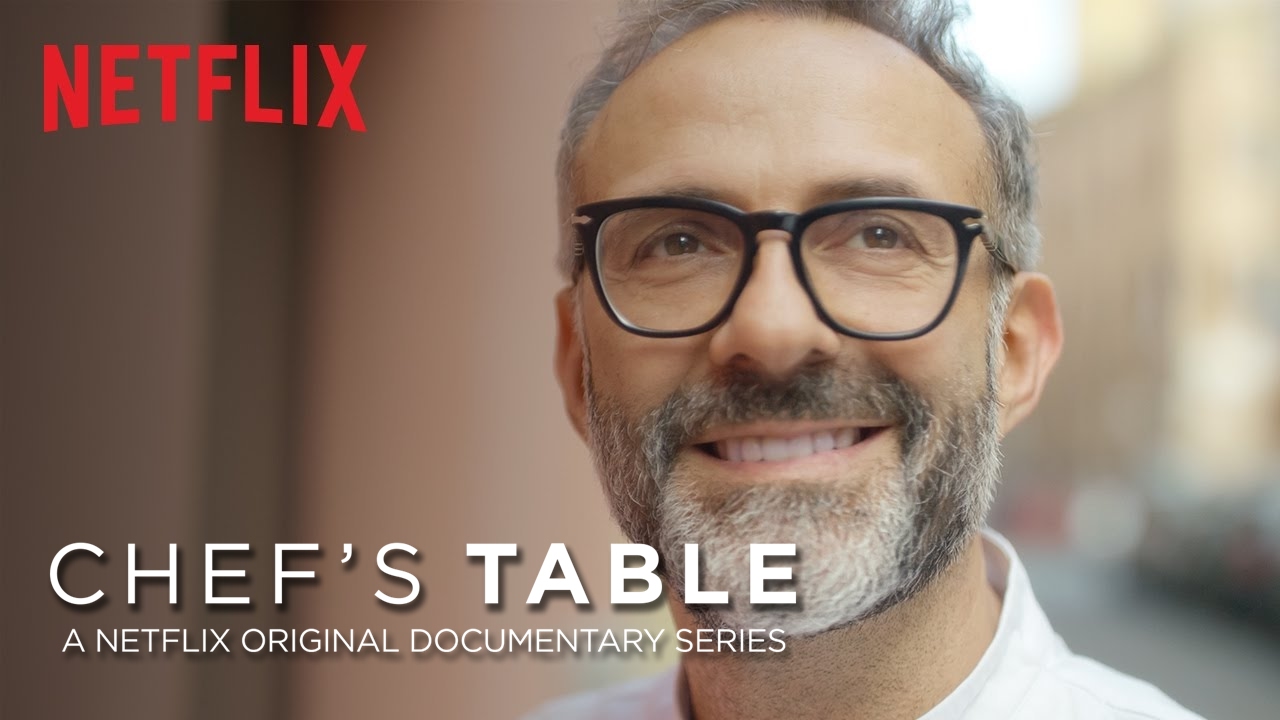


The very first episode is the embodiment of the show with Massimo Bottura whose restaurant is in Modena, Italy.  It also closely ties into my previous blog about the pursuit of Michelin stars.  Massimo did not follow the tried and true tradition of following the grandmother's Italian cooking.  He instead personally wanted to combine and experiment with re-inventing traditional dishes with an application of classical French training.  Not to go too much into detail, but needless to say many were not happy with his idea in the beginning.  He struggled and eventually through perseverance won people over and now has three Michelin stars.  Why is this important you might ask?  Because Massimo did his own thing.  He made his restaurant not by the structure of the safe route yet instead made it what all Chefs hope to achieve: an extension of themselves and being rewarded for it.  He believed in what he was doing and because of who he is created a restaurant like no other.

I can't think of a better example of how having a story is the building blocks for creating a brand
and all that defines it to everyone who has the luck of reserving a seat at Osteria Francescana.


What You Never Knew You Wanted In a Knife

Most people who are from enthusiast to professional cook have a love for cutlery knives either as an extension of themselves or a status symbol.  However, Bob Kramer takes this to another level.  The majority of individuals do not know the extent in the production of one of these knives; however, you know just by looking, it took a lot of care and effort.  Bob Kramer is part of a dying breed of the seriously dedicated to hand crafted workmanship. 


Much like a qualitative research method called the ZMET, Bob has cracked the code to giving a knife a personality of its own.  An individual will pay thousands of dollars for just one of his knives.  In the series Raw Craft with Anthony Bourdain (to your left) is a clear example of how the physical transition of research pays off.  To look at more of Bob Kramer's work click here.


I think this speaks volumes about our current climate in the manufacturing of goods.  We now are in a state of mind that everyone generally fits in style A or style B with the addition of surface cosmetics (color and type of fabric). You buy a pair of shoes from Nike and they don't quite fit right but we kid ourselves by saying we need to break them in.  Indeed that was the thought process on knives in the past.  You use it enough that you learn to accommodate the knife and in turn the knife takes on your errors of use.  An example of this would be how you sharpen your blades over time.  This creates a change to the shape of the original edging and curvature of the blade.  On Bob Kramer's website on his philosophy page he states:

Somewhere in my journey, I came across the Japanese concept of Kaizen. It is the idea of "improvement" - that by focusing on improving a product or process by our attention to detail, and being present, we are also changing. In my shop we use Kaizen to mean The Relentless Pursuit of Excellence. Every day we ask, "how can we do this better?".
My quest is to make the best kitchen knives available. This wouldn't be possible without the support and interest of my customers and those who appreciate the art of craft. Thank you.

And I find that to be a hidden meaning in our every day lives.  We are sold on the idea because of marketing that buying certain things will provide happiness and a feeling of inclusiveness with a product.  Jeep owners wave at each other, golf clubs or any other type of resort you pay a premium for a sense of community.  It all means nothing though at the end of the day in terms of improving yourself.  That quote above about the thought process of Kaizen is the driving force for all aspiring cooks and Chefs.  You have to have that kind of mindset when you are creating the same dish over and over again.  Each day you try to make the presentation a little better, a little faster and a little more confidently.  We want things to be an extension of ourselves and in that truly great work is not manufactured in production but in the individuals striving for excellence day after day.  I would recommend looking at the following three videos also if you are into
Playing Guitar


A Real Passion for Suits


and The Feel of a Truly Fitting Shoe


Monday, December 12, 2016

The impact of chasing a standard


The Price of a Michelin Star

Ever since the beginning of the Michelin Guide, restaurants have sought to be listed in its pages.  In 1900 the tire manufacturers André Michelin and his brother Édouard published the first of a guide for French motorists.  It was intended to boost the demand for cars, and thus for car tires. It was originally given away free of charge.  Containing information for motorists, maps, instructions for tires, mechanics, hotels and petrol stations.  Basically it was the first reference to use if you were passing through a place you had never been before.  They eventually started charging for the book and now depending on the gain or loss of a star can have devastating effects on a high end restaurant.  The scaling goes as follows


1 Michelin star: "A very good restaurant in its category" (Une très bonne table dans sa catégorie)
2 Michelin stars: "Excellent cooking, worth a detour" (Table excellente, mérite un détour)
3 Michelin stars: "Exceptional cuisine, worth a special journey" (Une des meilleures tables, vaut le voyage)

Now you might be wondering how does this have anything to do with the impact of chasing a standard? It all comes down to following the views of others and the environment it creates.  No other Chef has accomplished the highest standards of Michelin and created so much controversy with giving back his stars.


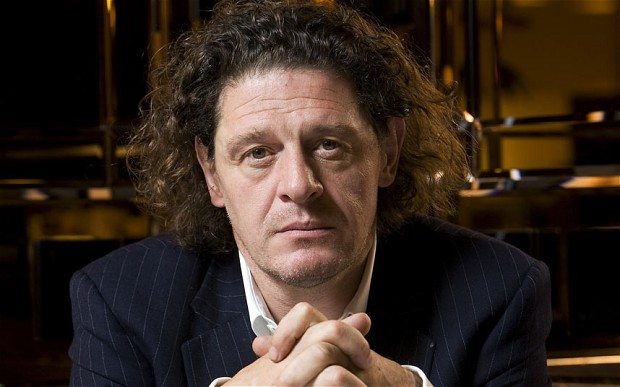
Marco Pierre White was one of the youngest to get three stars while also being the first British chef to achieve it.  He was know for his attitude as the first bad boy of the culinary world, his temper in the kitchen, and as the mentor of Gordon Ramsey who followed in much the same footsteps.  Regardless of your opinion of his personality, White still is regarded as one of the greatest chefs of the past 50 years.  
Although White worked for 17 years to achieve the three stars, in spite of his accomplishments, recognition and fame, his career did not provide him with the personal vindication. So, in 1999 he retired and returned his Michelin stars.

He stated and continues to stand behind the following quote:
"I was being judged by people who had less knowledge than me, so what was it truly worth? I gave Michelin inspectors too much respect, and I belittled myself. I had three options: I could be a prisoner of my world and continue to work six days a week, I could live a lie and charge high prices and not be behind the stove or I could give my stars back, spend time with my children and re-invent myself."
Not everyone in the culinary world has been as lucky to have this mindset.  The greatest and maybe saddest embodiment of this is

Bernard Loiseau


Loiseau committed suicide on 24 February 2003, shooting himself in the mouth with his shotgun after a full day of work in his kitchen. The Gault Millau guide had recently downgraded his restaurant from 19/20 to 17/20, and there were also rumors in Le Figaro that the Michelin Guide was planning to remove one of La Côte d'Or's three stars.
Loiseau had made a life's ambition of becoming a 3-star chef, a goal which had similarly to White required 17 years of hard work at La Côte d'Or to achieve.
 "If I lose a star, I'll kill myself."
While it was later reported that Loiseau was probably more significantly distressed over his debt issues and decreasing patronage at his restaurant, Michelin still received blame in some accounts and why should it not?  This Guide was never intended to become what it is.  You make more money in a diner then you do in a high end restaurant.  The margins are as small as 1.8% on food and you're gonna be stressed.  It doesn't help that your status is decided by a select few.  It's a braking point that many cannot handle and even less can cope.  Chasing others' approval can never end well and now people are realizing it and following their own path.  I would recommend watching Chef's Table if you have a Netflix account.


Matty Matheson


Hi guys this is my first time blogging and hope you find some of the stuff interesting.  The idea of these blogs is related to food and how it impacts the social and economic landscape.  A little about myself is that I am a duel citizen of Canada and America.  I am a line cook at a restaurant and I like talking about what we take for granted in the art of cooking.

This is

Matty Matheson


an interesting guy but what I find fascinating about him is that he is one of the cooks that really understands his consumers and empathizes with them.  It has led him to much success as a restaurant owner of Parts and Labor and also as a celebrity with his shows  Keep It Canada and Dead Set On Life.  What really changed my mind about him just being a loud and unique individual was when I saw his interview with BUILD series below.


During the interview he talks about how people in the food industry use excessively complex terminology to describe their food making process.  A personal example is in cooking there is a term called  

Julienne: defined as or allumette, is a culinary knife cut in which the food item is cut into long thin strips, similar to matchsticks. Common items to be julienned are carrots for carrotsjulienne, celery for céléris remoulade or potatoes for JulienneFries.

Which basically you could explain much easier as cut into thin strips.  The vocabulary does nothing for the individual eating regardless of their knowledge of food.  The point of this vocabulary was to make things easier in the kitchen for the cooks to tell each other either on the fly or on a prep list short and sweet.  In the past 30 years cooking has gone from an art where professional chefs turned an upturned nose on the individual that does not know the terminology to the present focusing on creating a more inviting atmosphere to the industry.  Knowing your customer is the basis to a successful business and there is a reason the local diner has been always doing well.  It's the relationship and understanding that it has that makes it a success.  Good food with a decent meal and nice service is always going to be better than amazing food in an uncomfortable environment.