The Price of a Michelin Star
Ever since the beginning of the Michelin Guide, restaurants have sought to be listed in its pages. In 1900 the tire manufacturers André Michelin and his brother Édouard published the first of a guide for French motorists. It was intended to boost the demand for cars, and thus for car tires. It was originally given away free of charge. Containing information for motorists, maps, instructions for tires, mechanics, hotels and petrol stations. Basically it was the first reference to use if you were passing through a place you had never been before. They eventually started charging for the book and now depending on the gain or loss of a star can have devastating effects on a high end restaurant. The scaling goes as follows
1 Michelin star: "A very good restaurant in its category" (Une très bonne table dans sa catégorie)
2 Michelin stars: "Excellent cooking, worth a detour" (Table excellente, mérite un détour)
3 Michelin stars: "Exceptional cuisine, worth a special journey" (Une des meilleures tables, vaut le voyage)
Now you might be wondering how does this have anything to do with the impact of chasing a standard? It all comes down to following the views of others and the environment it creates. No other Chef has accomplished the highest standards of Michelin and created so much controversy with giving back his stars.
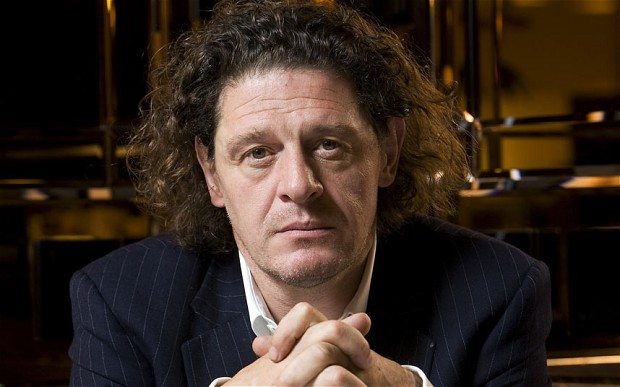
Marco Pierre White was one of the youngest to get three stars while also being the first British chef to achieve it. He was know for his attitude as the first bad boy of the culinary world, his temper in the kitchen, and as the mentor of Gordon Ramsey who followed in much the same footsteps. Regardless of your opinion of his personality, White still is regarded as one of the greatest chefs of the past 50 years.
Although White worked for 17 years to achieve the three stars, in spite of his accomplishments, recognition and fame, his career did not provide him with the personal vindication. So, in 1999 he retired and returned his Michelin stars.
He stated and continues to stand behind the following quote:
Not everyone in the culinary world has been as lucky to have this mindset. The greatest and maybe saddest embodiment of this is
Bernard Loiseau

Loiseau committed suicide on 24 February 2003, shooting himself in the mouth with his shotgun after a full day of work in his kitchen. The Gault Millau guide had recently downgraded his restaurant from 19/20 to 17/20, and there were also rumors in Le Figaro that the Michelin Guide was planning to remove one of La Côte d'Or's three stars.
Loiseau had made a life's ambition of becoming a 3-star chef, a goal which had similarly to White required 17 years of hard work at La Côte d'Or to achieve.
"If I lose a star, I'll kill myself."
While it was later reported that Loiseau was probably more significantly distressed over his debt issues and decreasing patronage at his restaurant, Michelin still received blame in some accounts and why should it not? This Guide was never intended to become what it is. You make more money in a diner then you do in a high end restaurant. The margins are as small as 1.8% on food and you're gonna be stressed. It doesn't help that your status is decided by a select few. It's a braking point that many cannot handle and even less can cope. Chasing others' approval can never end well and now people are realizing it and following their own path. I would recommend watching Chef's Table if you have a Netflix account.

No comments:
Post a Comment